Cape Town · --:--

Micayla,
you are here.

A whole world of wonder, and a few people scattered across it who are so glad you're in it.

—days you've been alive. I don't believe a single one of them was an accident.

I made you this instead of a card. Take your time. Start anywhere.

made for you, from New York

A little reminder, whenever you need one

1 of 20 little reminders

For the big days, the quiet days, and the days that feel like a lot.

One planet. Our people.

    —

    About — km between your window and mine. Distance is just geography. Love is something else.

    Every week you've been alive.

    One dot for each. Every row is a year, and the bright row is this one.

    —

    Every one of those is a week you spent getting more like yourself. Most of them felt like nothing at the time. None of them were nothing. The glowing one is this week.

    Look what you're doing right now.

    Sitting perfectly still, reading. And all the while, since this page opened:

    Live counters of heartbeats, breaths, red blood cells made and cells replaced since the page opened.

    Since the day you were born your heart has beaten about — times, and you've never once had to remember to do it.

    the numbers aren't a score. you don't have to do anything to be worth caring for.

    Nobody showed you how to do any of this.

    • Your heart started beating 22 days after you began, before you had a brain to tell it to. It hasn't taken a day off since.
    • You'll blink around 15 times a minute today, and each blink is a tiny moment of dark. Your brain quietly tidies every one of them away so the world never flickers for you. It has been doing that your whole life without once mentioning it.
    • Your eyes sort about a million shades of colour, and refocus in a third of a second, thousands of times a day, and they never once stop to ask whether you'd mind.
    • Gram for gram, your bones are stronger than steel. You grew all 206 of them yourself, out of nothing but dinners.
    • The lining of your stomach rebuilds itself every four days. Which is just as well, because if it didn't, your stomach would start digesting itself by about Thursday.
    • Your brain runs on about 20 watts, less than the lamp in your room, and no computer anybody has built has come close to what you do with yours.

    I will give thanks to you, for I am fearfully and wonderfully made. Your works are wonderful. My soul knows that very well.

    Psalm 139:14 · written by David, about 3,000 years ago

    He had never heard of a cell, let alone the thirty-seven trillion of them that make you. He just looked at what he was, and was amazed. Fair enough, really.

    Since you were born, look how far you've come.

    You've never really sat still. Even on the laziest Sunday you were being carried through space, and these numbers are still climbing while you read them.

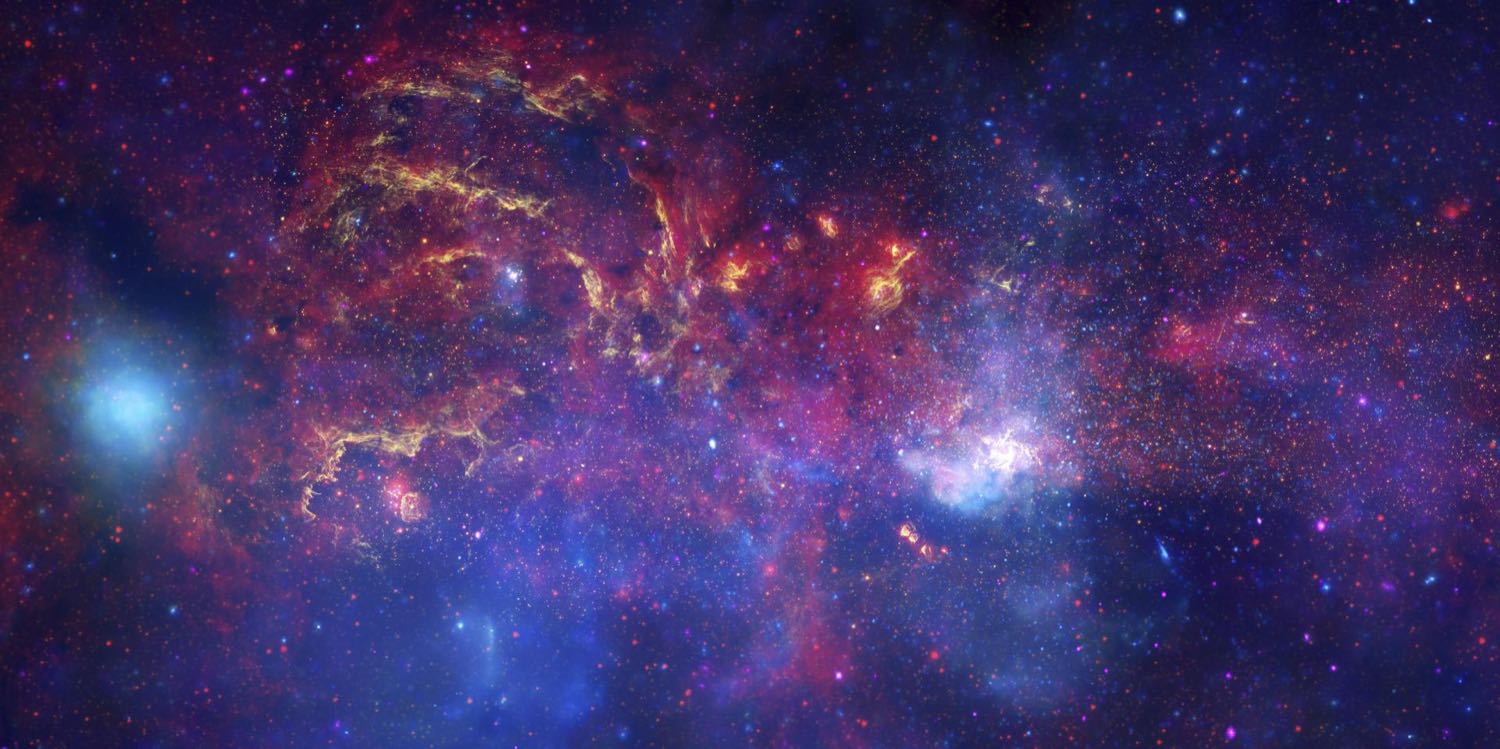
    The glowing, crowded middle of the Milky Way, in reds, golds and blues
    the middle of our own galaxy. we live out on one of its arms.

    Around the Sun

    —kilometres

    The Earth carries you round the Sun at about 30 km every second, and it hasn't stopped once since the day you arrived.

    A flash of light

    —kilometres

    If a flash of light had set off the day you were born, this is how far it would have travelled by now.

    Through the Milky Way

    —kilometres

    The Sun takes the whole solar system along on its own journey around our galaxy, at roughly 200 km a second.

    A world that keeps turning

    —kilometres

    How far a spot on the equator has spun since you arrived. Somewhere, a new morning is always on its way.

    The Moon's quiet journey

    —kilometres

    Our Moon has been going round us the whole time, about a kilometre every second.

    A ride above the clouds

    —kilometres

    How far the Space Station would have flown in the same time, at about 28,000 km an hour. Imagine the view.

    8m 20sis how long sunlight takes to reach you. The light on your face has already been on a little journey.

    16sunrises a day is what astronauts on the Space Station see, and sixteen sunsets. Imagine that window seat.

    3.8 cmis how much further away the Moon drifts each year. About as fast as your fingernails grow.

    You and the stars are made of the same things.

    Take a star, any star, however impossibly far away, and catch its light, and split that light apart into its colours. Every element leaves its own signature in there. Its own fingerprint.

    Which means you can stand in a garden in Cape Town and read what something unreachable is made of, without ever going near it. And what comes back is the same short list.

    Hydrogen. Carbon. Oxygen. Calcium. Iron. The same calcium that's in your teeth. The same iron that makes your blood red. The same oxygen you just breathed in without noticing you were doing it.

    So you're not a small thing looking out at an enormous one. You're made of what it's made of, which I think makes the stars a little less far away.

    • There are only 92 elements that occur naturally in the whole of creation. That's the entire ingredient list, for the sea, for the rocks under Table Mountain, for a sunbird, for a whale, for you.
    • You are roughly 7 octillion atoms, a 7 with 27 zeros after it, currently arranged into a girl in Cape Town.
    • The DNA coiled inside you, unwound and laid end to end, would reach the Sun and back hundreds of times. It's folded up inside you right now.
    • The water in you is borrowed. It's been rain, and river, and ocean, and one day it'll be somewhere else entirely. You just have it for a while.
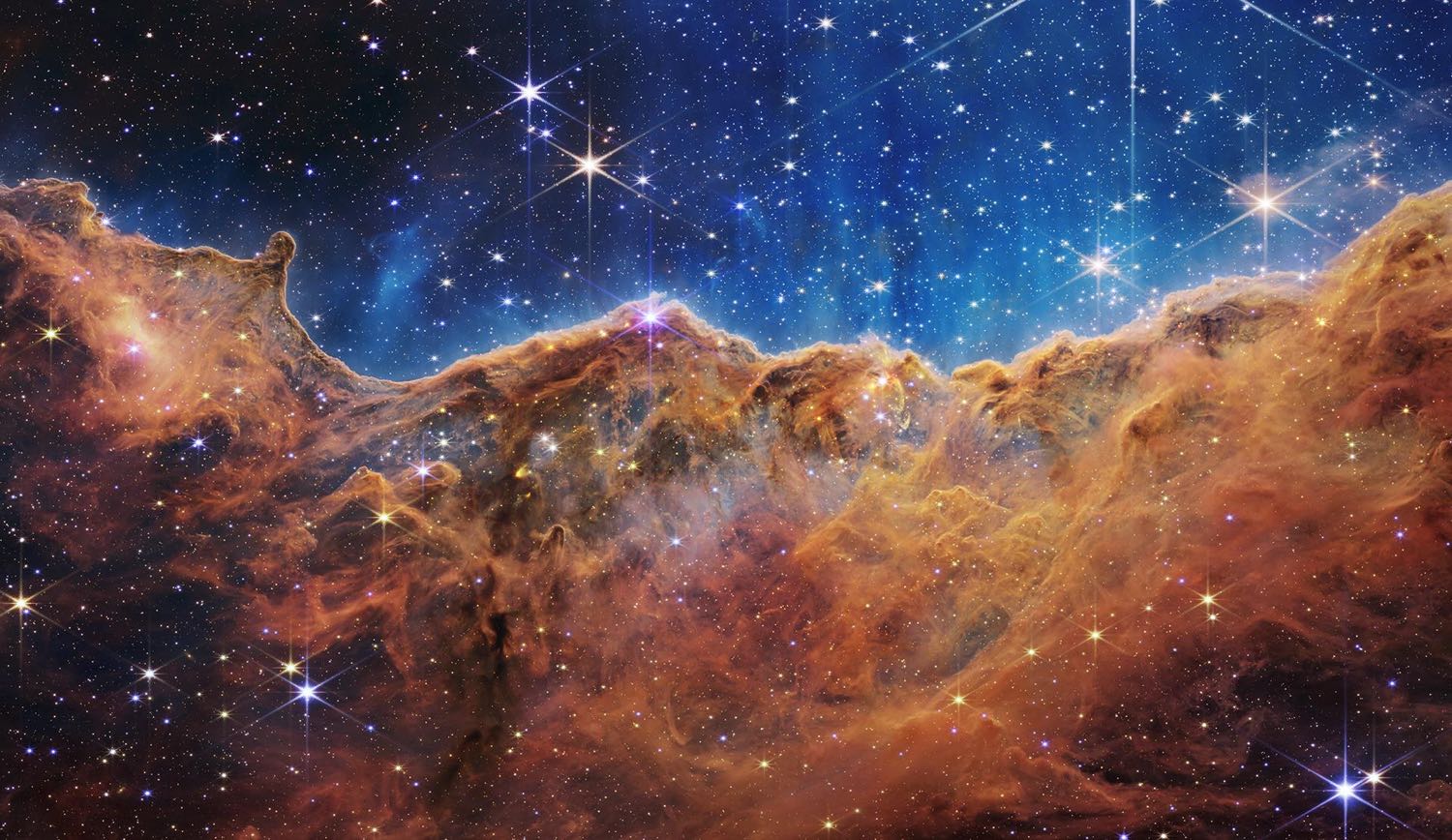
    Towering orange cliffs of gas under a deep blue sky full of bright stars
    the Cosmic Cliffs in Carina, taken by the Webb telescope. look at those colours.

    All the rivers run into the sea, yet the sea is not full. To the place where the rivers flow, there they flow again.

    Ecclesiastes 1:7 · written about 3,000 years ago

    That's the water cycle. Science didn't properly describe it until the 1600s.

    Look up. You're looking backwards.

    Every star you've ever looked at, you were looking at the past. The light left long before it reached you, so you're not really looking at the sky. You're looking at the sky's history, all at once, in one glance.

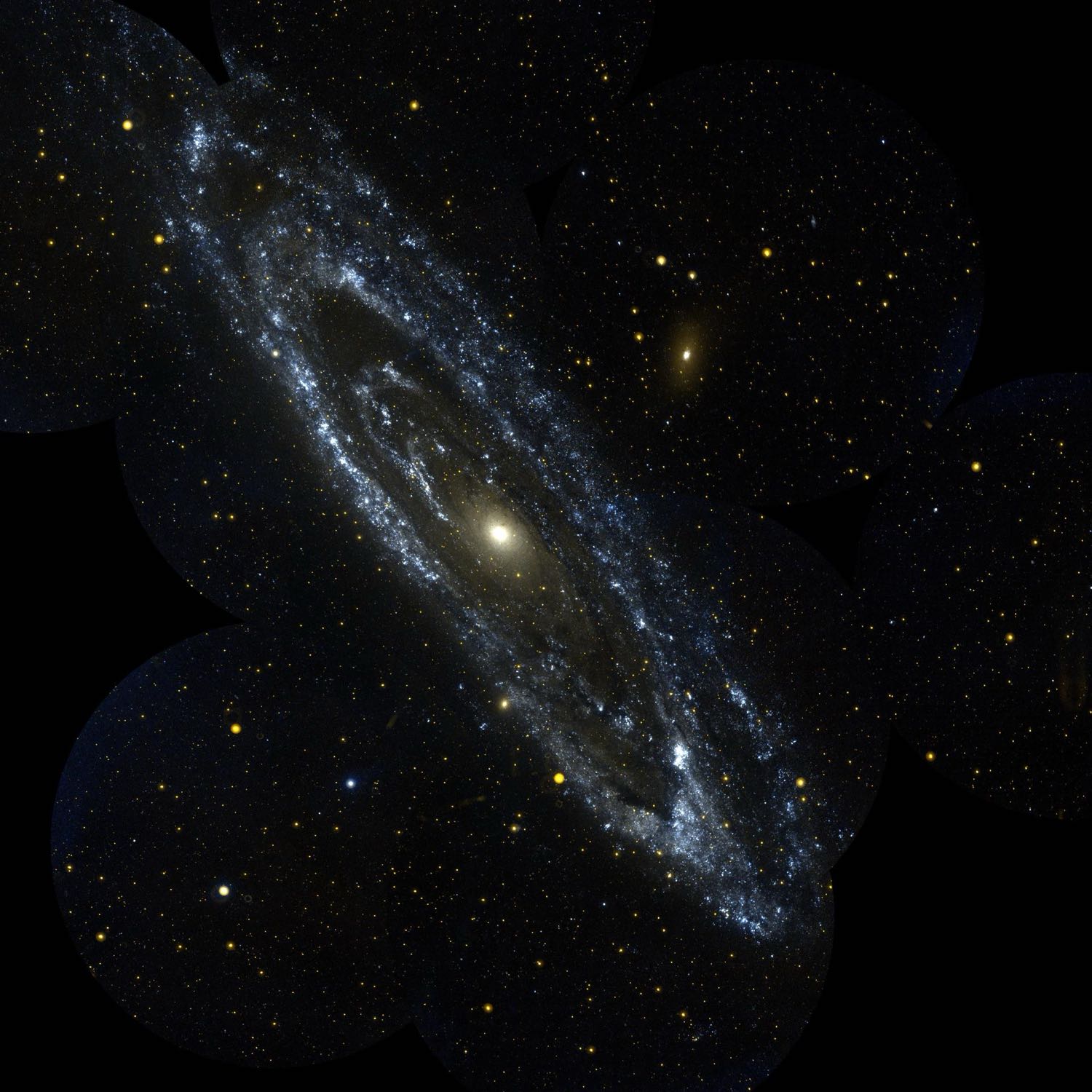
    • The Andromeda galaxy is the furthest thing you can see with your bare eyes, and its light is 2.5 million years old when it lands on you. No telescope. Just you, standing in a garden.
    • There are more stars in the universe than there are grains of sand on every beach on Earth. All of them, every beach, everywhere.
    • Before it set off towards you, the sunlight on your face spent tens of thousands of years working its way out from the middle of the Sun.
    The Andromeda galaxy, a tilted silver-blue spiral with a bright golden centre
    Andromeda. you can find it without a telescope.

    Every one of them, by name.

    Two of the oldest named star patterns there are, drawn here exactly where their stars sit, the way you see them from Cape Town. From your side of the world, Orion stands on his head.

    BetelgeuseRigel
    Orion · upside down, from Cape Town
    The Pleiades · seven sisters, travelling together

    He counts the number of the stars. He calls them all by their names.

    Psalm 147:4 · written more than 2,500 years ago

    Astronomers think our own galaxy holds a hundred billion stars or more, and ours is one galaxy among a great many. Every single one, by name.

    As the army of the sky can’t be counted, and the sand of the sea can’t be measured…

    Jeremiah 33:22 · written about 2,600 years ago

    The great star catalogues of the ancient world listed around a thousand stars, which was everything anyone could see and count. Jeremiah compared the stars to the sand of the sea, the very comparison we reach for now that we have telescopes.

    Can you bind the cluster of the Pleiades, or loosen the cords of Orion?

    Job 38:31 · written about 3,500 years ago

    We now know the stars of the Pleiades really do travel together as one family, and Orion’s are slowly drifting apart. Bound, and loosened.

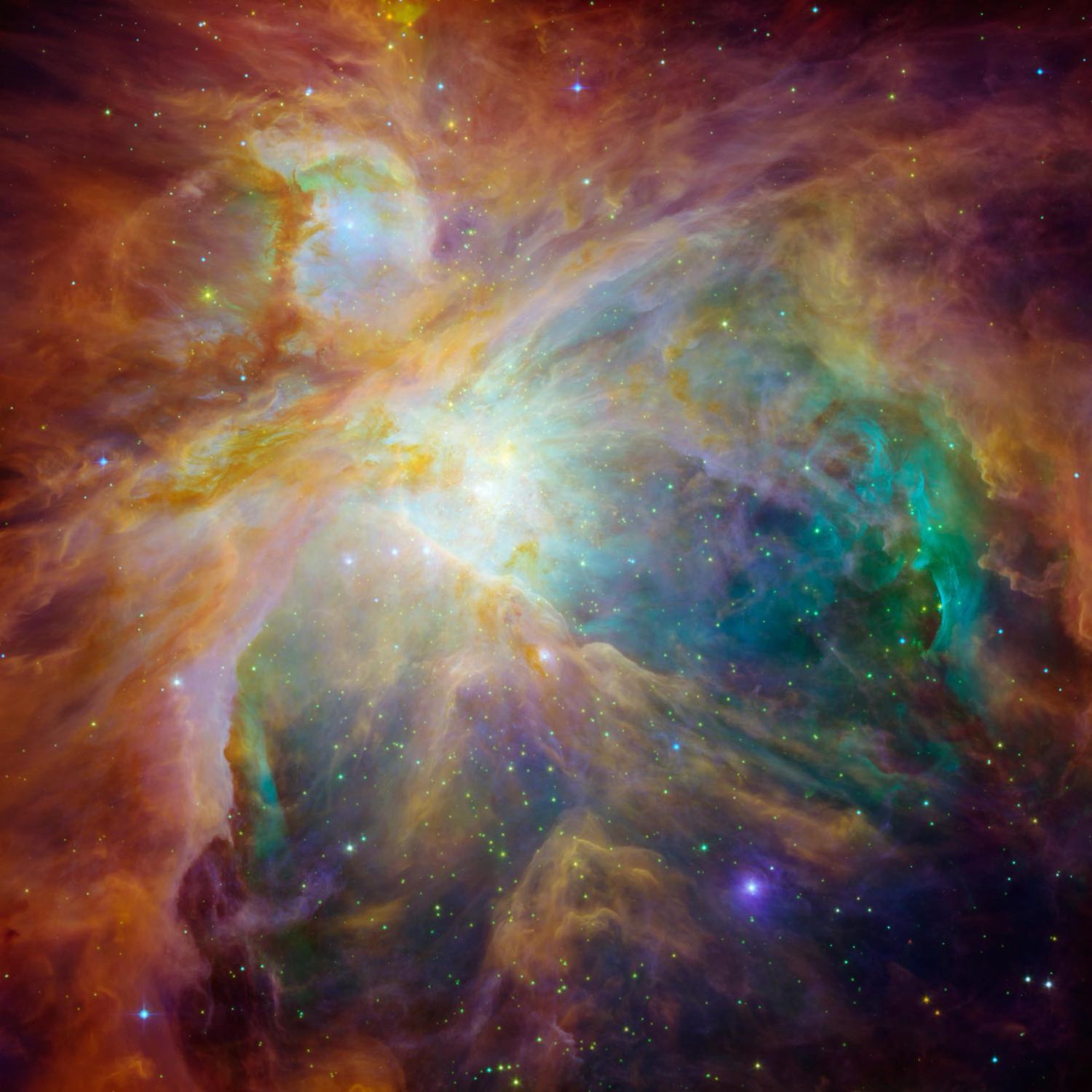
    The Orion Nebula, swirling clouds of orange, teal and gold lit from within
    the Orion Nebula. it hangs in Orion's sword, and on a dark night you can see it as a small smudge of light.

    Our very own star.

    One star warms the oceans, helps every green thing grow, and makes this whole little world possible. Since the day you were born:

    Sunshine that has reached the Earth

    —exajoules (about)

    In a single hour, about as much of it arrives as everyone on Earth uses in a whole year.

    Hydrogen the Sun has turned into sunshine

    —tonnes (about)

    Around 600 million tonnes every second, and it has never once run late.

    tonight's moon, the way you see it. in New York it's the other way round. same Moon.

    Yahweh, our Lord, how majestic is your name in all the earth! You have set your glory above the heavens! … When I consider your heavens, the work of your fingers, the moon and the stars, which you have ordained…

    Psalm 8:1, 3 · written by David, about 3,000 years ago

    It's the very same moon that will be over Cape Town tonight.

    It's wonderfully strange out there.

    Deep inside Neptune and Uranus the pressure is so extreme that scientists have recreated it in a laboratory and watched carbon turn into diamond. As far as we can tell, it rains diamonds down there. Nobody has ever been to check.

    A neutron star is so dense that one teaspoon of it would weigh about a billion tons.

    There's a cloud of water vapour floating in space holding 140 trillion times all the water in all of Earth's oceans.

    A day on Venus lasts longer than a year on Venus. The planet turns more slowly than it goes round.

    Jupiter has a storm bigger than the whole Earth that has been spinning for at least 190 years without stopping.

    Voyager 1 left Earth in 1977, is about 25 billion kilometres away, and is still calling home.

    Everything had to be exactly right.

    Here's what I find hardest to think of as luck.

    • The Earth leans over at 23.4 degrees. That lean is the only reason there are seasons. Straighten it up and there's no spring, anywhere, ever again.
    • The Moon is big enough and close enough to hold that lean steady. Without it the whole planet would wobble and the weather would swing wildly.
    • The Moon is also about 400 times smaller than the Sun and about 400 times closer, which is the only reason a total eclipse fits so exactly. Nowhere else we know of gets that.
    • Jupiter is enormous and far enough out to catch comets that would otherwise be heading for us.
    • Deep inside the Earth, molten iron makes a magnetic field that turns the solar wind aside. Mars has no such field, almost no air left, and no liquid water on its surface at all.
    • We sit at the one distance from the Sun where water stays liquid. A little closer and it boils away. A little further and it never melts.

    Not one of those settings had to land where it did. Every single one of them did.

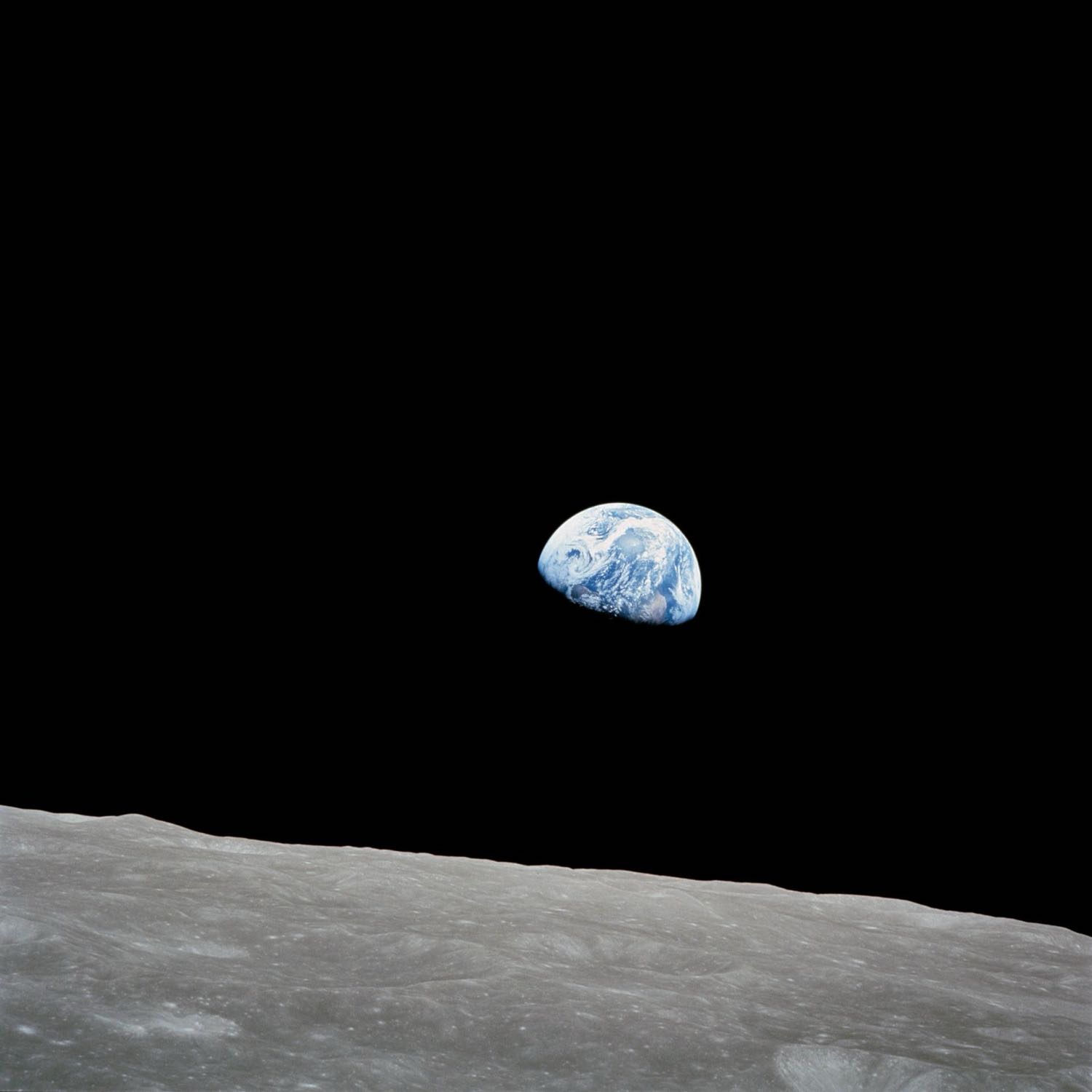
    Earthrise: the blue and white Earth rising above the grey edge of the Moon, against black space
    Earthrise, 1968. hanging on nothing at all.

    He stretches out the north over empty space, and hangs the earth on nothing.

    Job 26:7 · written about 3,500 years ago

    Written when the earth was pictured resting on something: pillars, a turtle, the shoulders of a god. It took until 1968 to get far enough away to take the photograph beside this, and see that it really is hanging on nothing at all.

    For Yahweh who created the heavens, the God who formed the earth and made it, who established it and didn’t create it a waste, who formed it to be inhabited…

    Isaiah 45:18 · written about 2,700 years ago

    I think everything on the page beside this, the tilt, the Moon, the magnetic field, the one right distance from the Sun, is what "formed it to be inhabited" looks like when you measure it.

    A whole floral kingdom on your doorstep.

    There are only six floral kingdoms in the whole world, and one of them is right where you live. The Cape's is the smallest of the six by far, and it's packed fuller than any of the others.

    • More than 9,000 kinds of plant grow in the Cape, and about seven in every ten grow nowhere else on Earth.
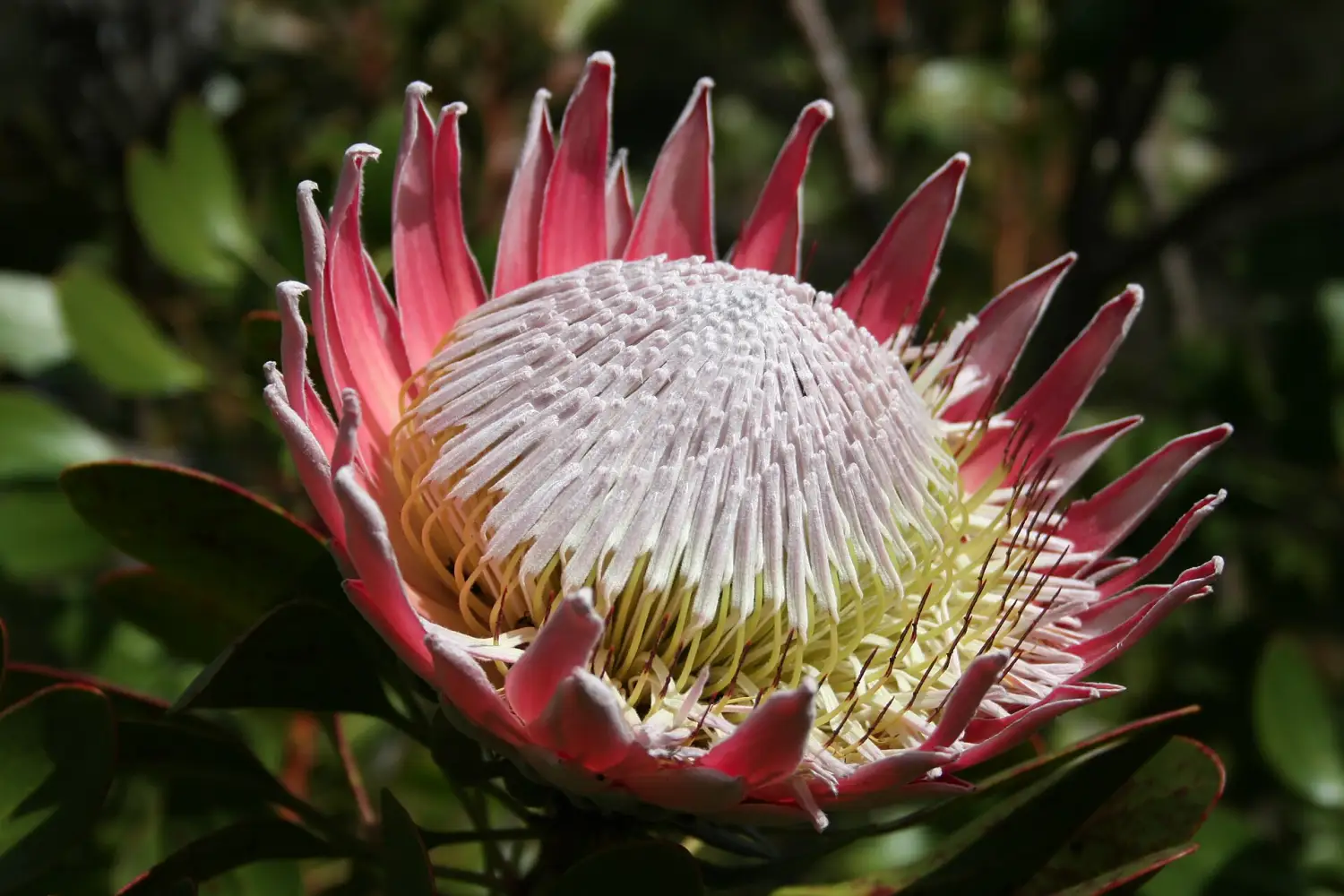
    • The king protea, the flower in the photograph, is South Africa's national flower. Its head can grow as big as a dinner plate.
    • Some fynbos seeds wait in the ground for years and only wake up after a fire has passed through. They know when it's safe to start.
    A king protea in full bloom, a crown of pale pink petals around a silvery centre
    a king protea, near Stellenbosch.

    Yahweh, how many are your works! In wisdom, you have made them all. The earth is full of your riches.

    Psalm 104:24 · written about 3,000 years ago

    Nine thousand kinds of plant in one small corner of Africa, most of them found nowhere else. The earth really is full.

    Creation is full of lovely surprises.

    • 71% of the Earth is ocean, and all the seas join up into one enormous, flowing home.
    • Half of the oxygen you breathe is made in the ocean, mostly by plankton far too tiny to see.
    • An octopus has three hearts. Two pump blood through its gills, and the third sends it round the rest of its body.
    • Butterflies taste with their feet. Landing on a leaf tells them whether it's a good place for their eggs.
    • Young sunflowers turn to follow the Sun across the sky each day. Once they're grown, most settle facing east, ready for the morning.

    The same shapes keep turning up.

    Honeybees build in hexagons, which mathematicians proved in 1999 is the single most efficient shape there is, holding the most with the least wax. Nobody taught them geometry.

    One kind of spiral, the sort that keeps its exact shape however big it grows, turns up in a nautilus shell, in a hurricane, and in the arms of a galaxy. Things with nothing to do with each other, built to the same rule.

    Snow crystals grow in sixes, six sides and six arms, because of the shape water molecules lock into as they freeze. And it is very, very hard to find two that are exactly alike.

    Sunflower seeds sit in spirals that follow one particular run of numbers, and so do pinecones and pineapples. You can count them yourself. They come out right.

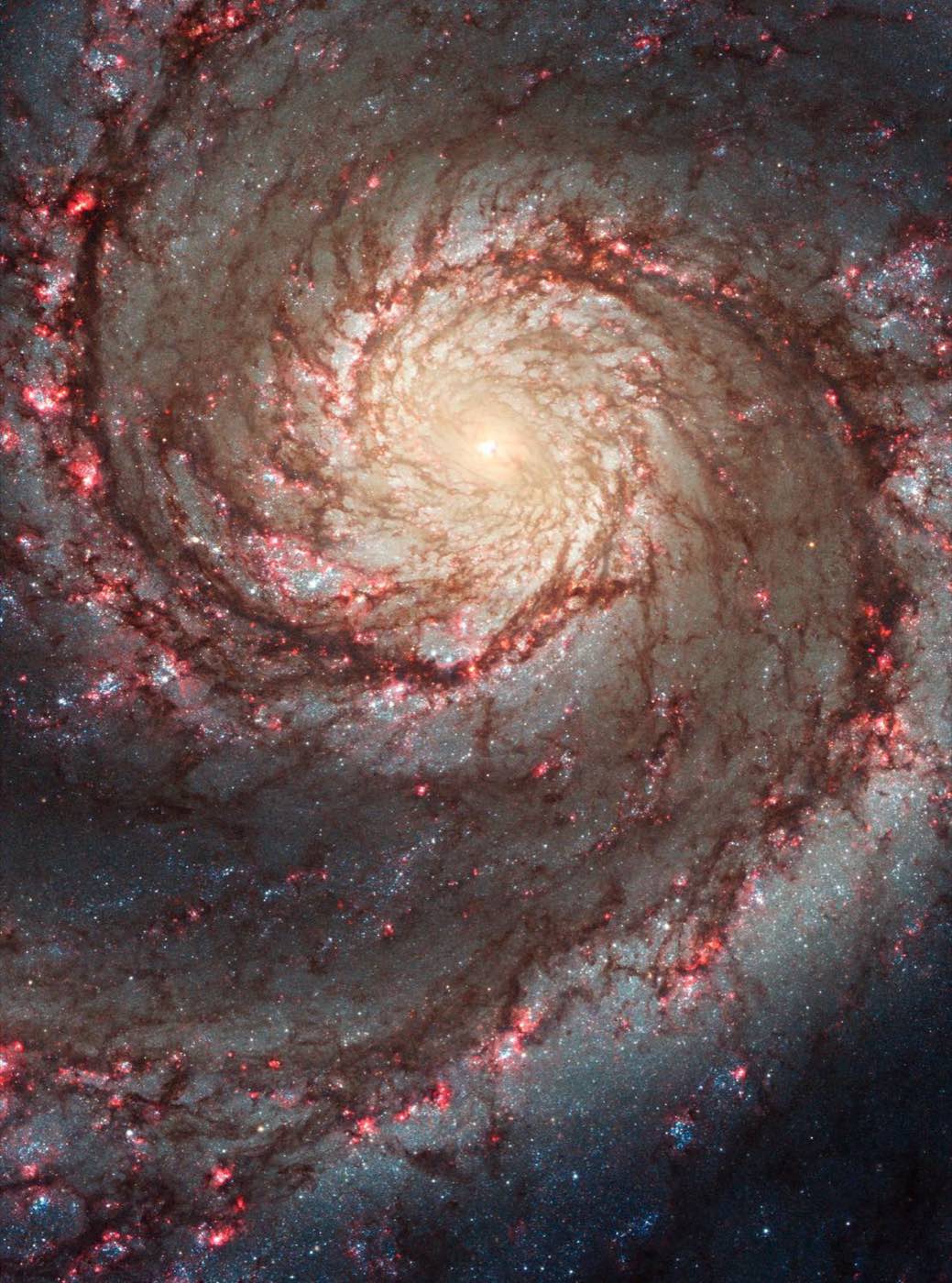
    The Whirlpool galaxy, a bright spiral with curling arms dotted with pink
    the Whirlpool galaxy. the same curl as a nautilus shell.

    There are four things which are little on the earth, but they are exceedingly wise: The ants are not a strong people, yet they provide their food in the summer.

    Proverbs 30:24, 25 · written more than 2,700 years ago

    Knowing a thing without ever being taught it is the strangest and most common trick in nature. Nobody has fully explained it yet.

    The best wonders aren't on a screen.

    A few little things to try next time you're out camping with your dad. Tick them off as you go. No big mission, just a curious eye and a bit of time together.

    look gently, and leave each little world just as you found it.

    And out of all of that, here you are.

    Your parents could have had about 70 trillion genetically different children. And they got you. Just the once, just this one time.

    Behind you stands an unbroken chain of people, every single one of whom lived long enough to have a child. Through famines, plagues, wars and journeys across oceans. Not one link broken, not once, in the whole chain.

    Nobody in the history of the world has had your fingerprints. Or the pattern in your eyes. Or your face, or your handwriting, or the particular sound you make when something is genuinely funny.

    And I don't expect anybody ever will.

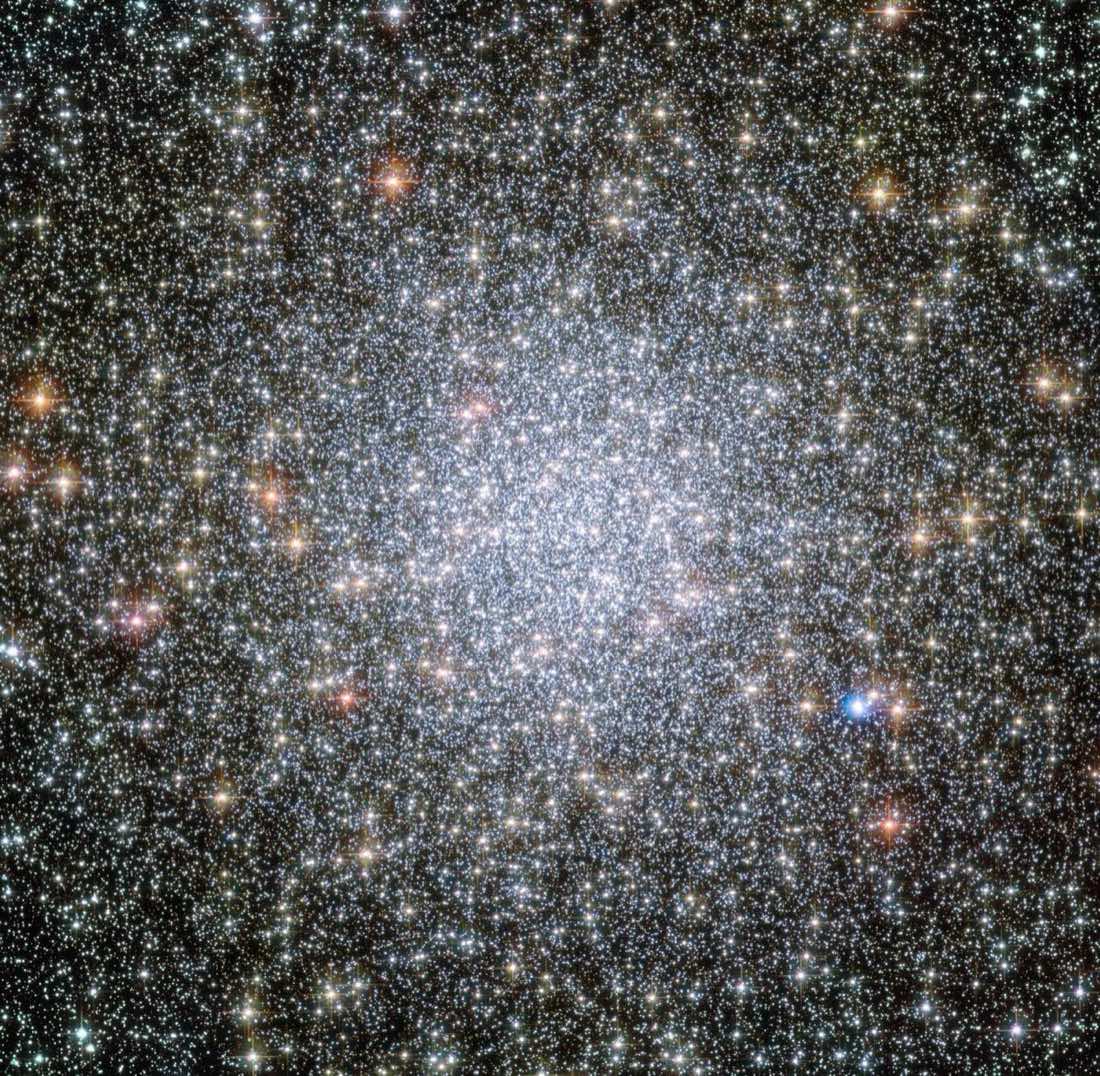
    A dense ball of countless stars, white at the centre with scattered gold and blue
    more stars than anyone could count. and only one of you.

    My frame wasn’t hidden from you, when I was made in secret, woven together in the depths of the earth. Your eyes saw my body.

    Psalm 139:15, 16 · written by David, about 3,000 years ago

    Written thousands of years before anyone could see inside a body. Now we can watch a baby being formed, every part of it, and David was right: none of it was hidden.

    There's one of you, and this is it, and I am extremely glad about it.

    Same sky. Different hour.

    —

    A bar-tailed godwit, a bird that weighs less than a bag of sugar, flew from Alaska to Tasmania in 2022 without landing once. No food. No sleep. No stopping. 13,560 kilometres, eleven days, on a route nobody taught it.

    That bird flew further than the distance between us. And it arrived.

    • Monarch butterflies find one particular forest in Mexico they've never seen, several generations on from the last butterfly that made the trip. The great-great-grandchildren know the way.
    • Arctic terns chase the summer from one end of the Earth to the other and back, about 70,000 km a year.
    • Salmon find the exact stream they hatched in, years later, by smell alone.

    Everything that needs to find its way home is given some way of finding it. I don't think that's a coincidence either.

    And here's the thing about our windows. The same Sun is on all our faces, eight minutes after it left. The same Moon pulls the same ocean past every one of us. And the whole time we've been apart, we've all been moving through space together, same direction, same speed.

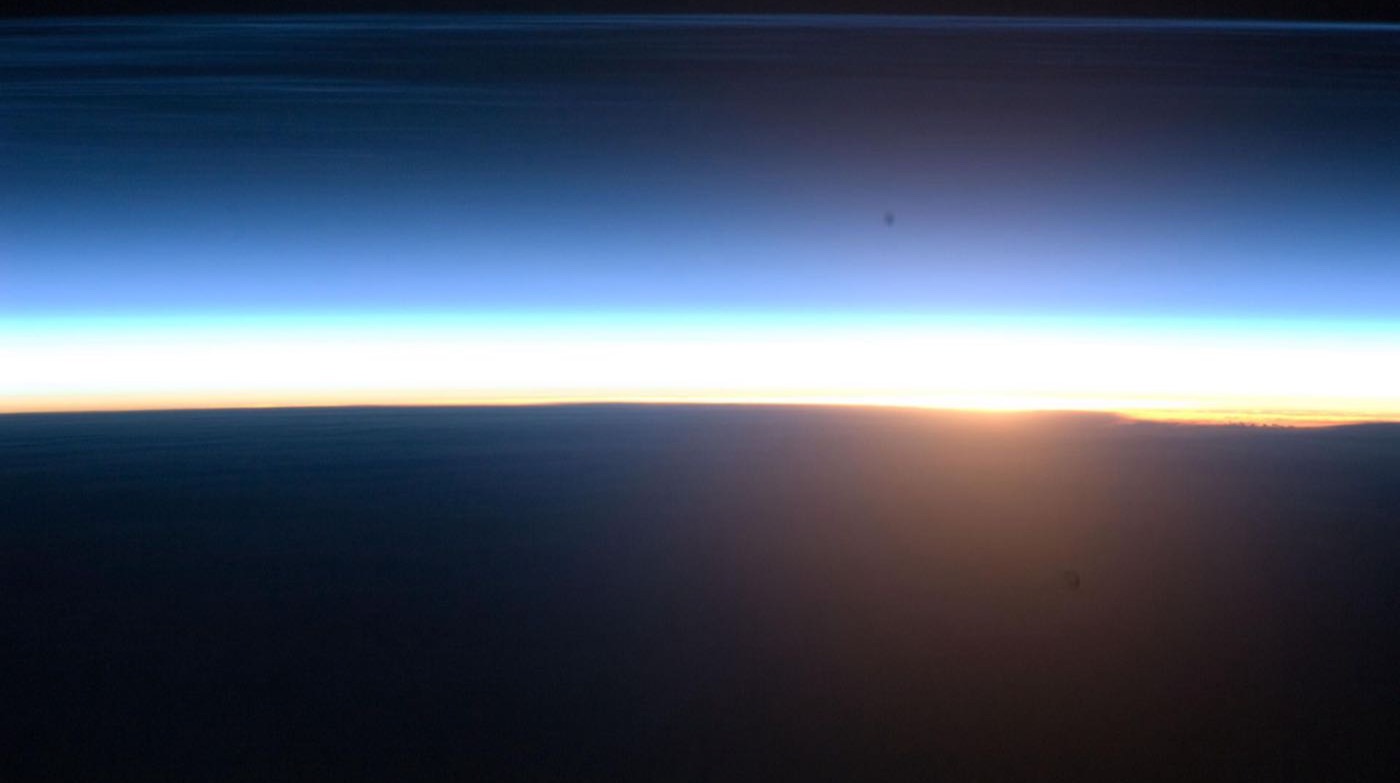
    Sunrise seen from orbit: a thin bright band of light along the curve of the dark Earth
    sunrise from the Space Station. one of sixteen that day.

    Yes, the stork in the sky knows her appointed times. The turtledove, the swallow, and the crane observe the time of their coming…

    Jeremiah 8:7 · written about 2,600 years ago

    Migration wasn't properly understood until the 1800s. Before that, people seriously believed birds spent the winter asleep at the bottom of ponds. Or on the Moon.

    We have never once been on different planets.

    Micayla,

    I sat down to write you something short, and then I started reading about birds, and now it's very late and there's an entire website. I'm sorry. This is what happens.

    Here's the true part.

    I've missed nearly all of it. The first steps, the first day of school, the first lost tooth, the arguments, all the ordinary Tuesdays. We got on a plane when you were brand new and I've been far away ever since. I'm not going to pretend that's fine. It's the thing I'd undo first.

    But I've been counting. Every one of those days happened, and I knew it was happening. Something funny happens and my first thought is that you'd love it. I see something and I want to show it to you. That's most days, and it's been most days for thirteen years. Being far away has never once made you less mine.

    You're thirteen now. You're turning into someone I haven't met yet, and I would very much like to meet her.

    So write to me. Tell me everything, including the boring parts. Especially the boring parts.

    One more thing. I registered micaylajane.com for you. It’s yours. I’ll keep it safe until you’re ready to use it, for whatever you like, whenever that turns out to be.

    I love you. I have from the very beginning.

    All my love,
    Aunty Jane